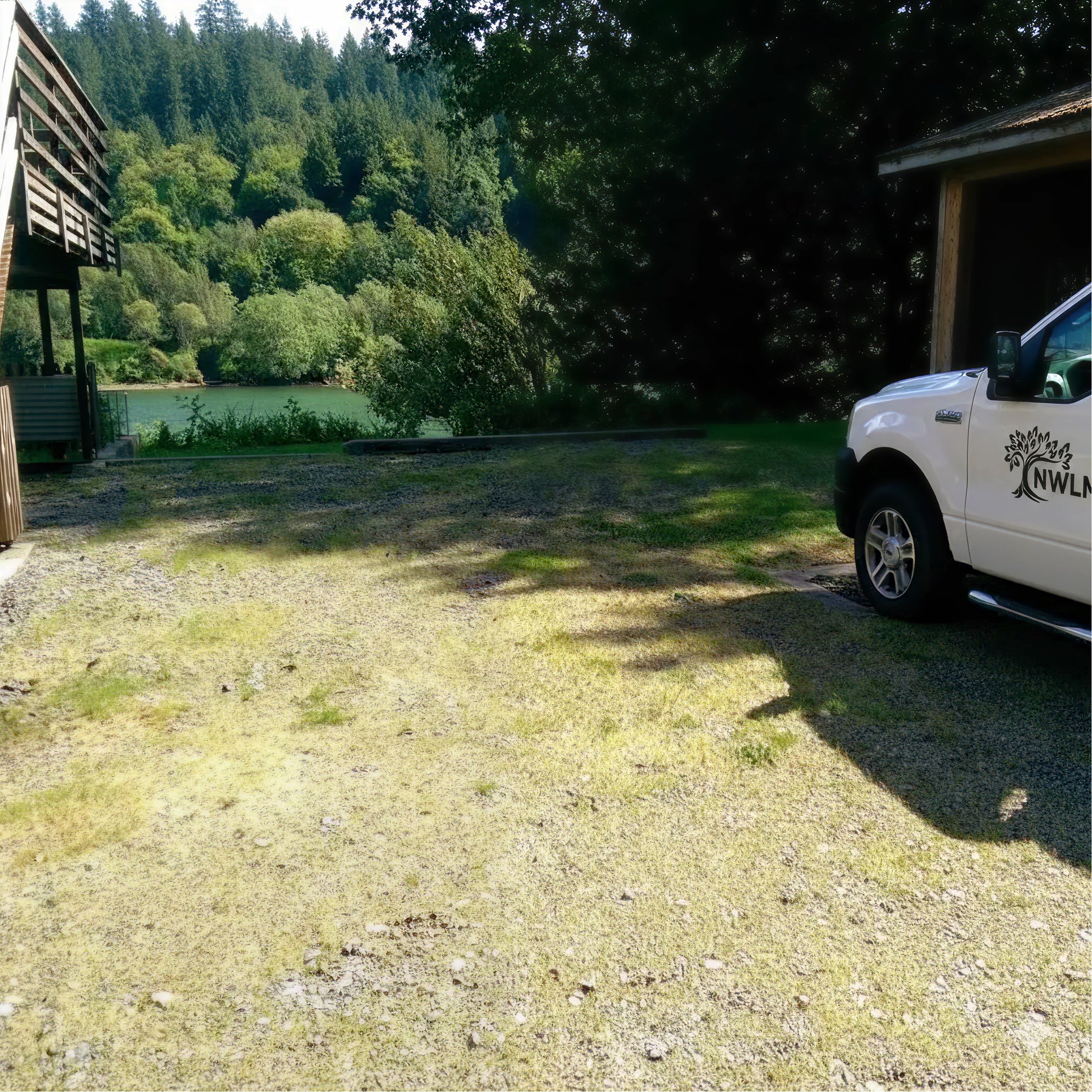
LOT CLEARING & FIRE PREVENTION
Whether you’re clearing a lot for a new project, reducing wildfire risk, or reclaiming land that’s gotten away from you — we have the equipment and the experience to get it done right.
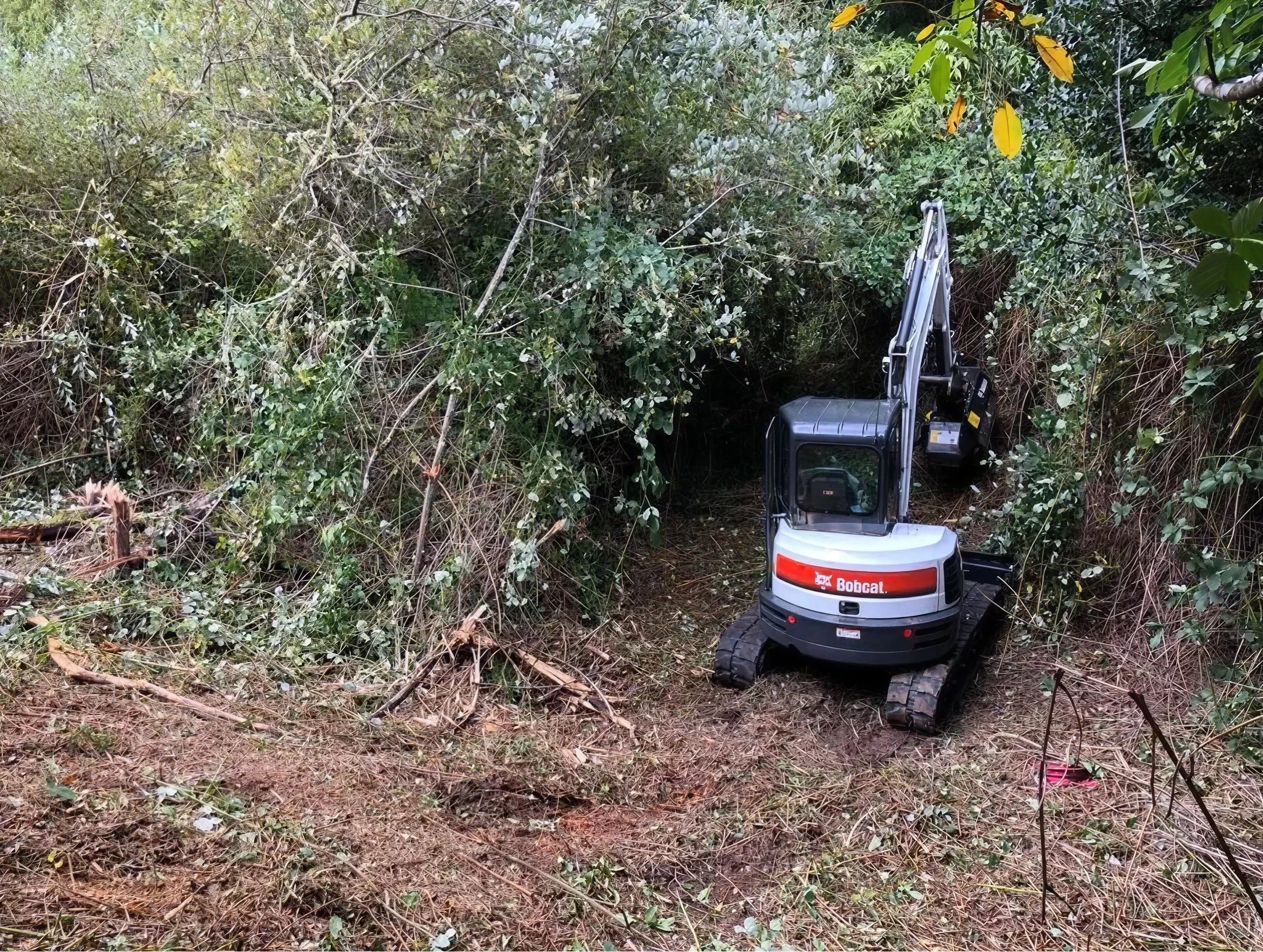
Lot Clearing & Vegetation Management
Overgrown lots, abandoned parcels, and dense undergrowth cleared down to workable ground. We bring in a skid steer with a forestry masticator that mulches brush, saplings, and small trees in place — no hauling, no burn piles. If larger trees need to come down, we fall them on-site and process the material.
Firewise Defensible Space
We assess your property against NFPA Firewise USA® standards and create the defensible space your home needs. That means managing vegetation across the full Home Ignition Zone — from the immediate 0–5 foot noncombustible perimeter to the 100-foot fuel break zone. We determine minimum clearances, thin tree canopies, remove fuel ladders, and clear accumulated debris.
Site Preparation
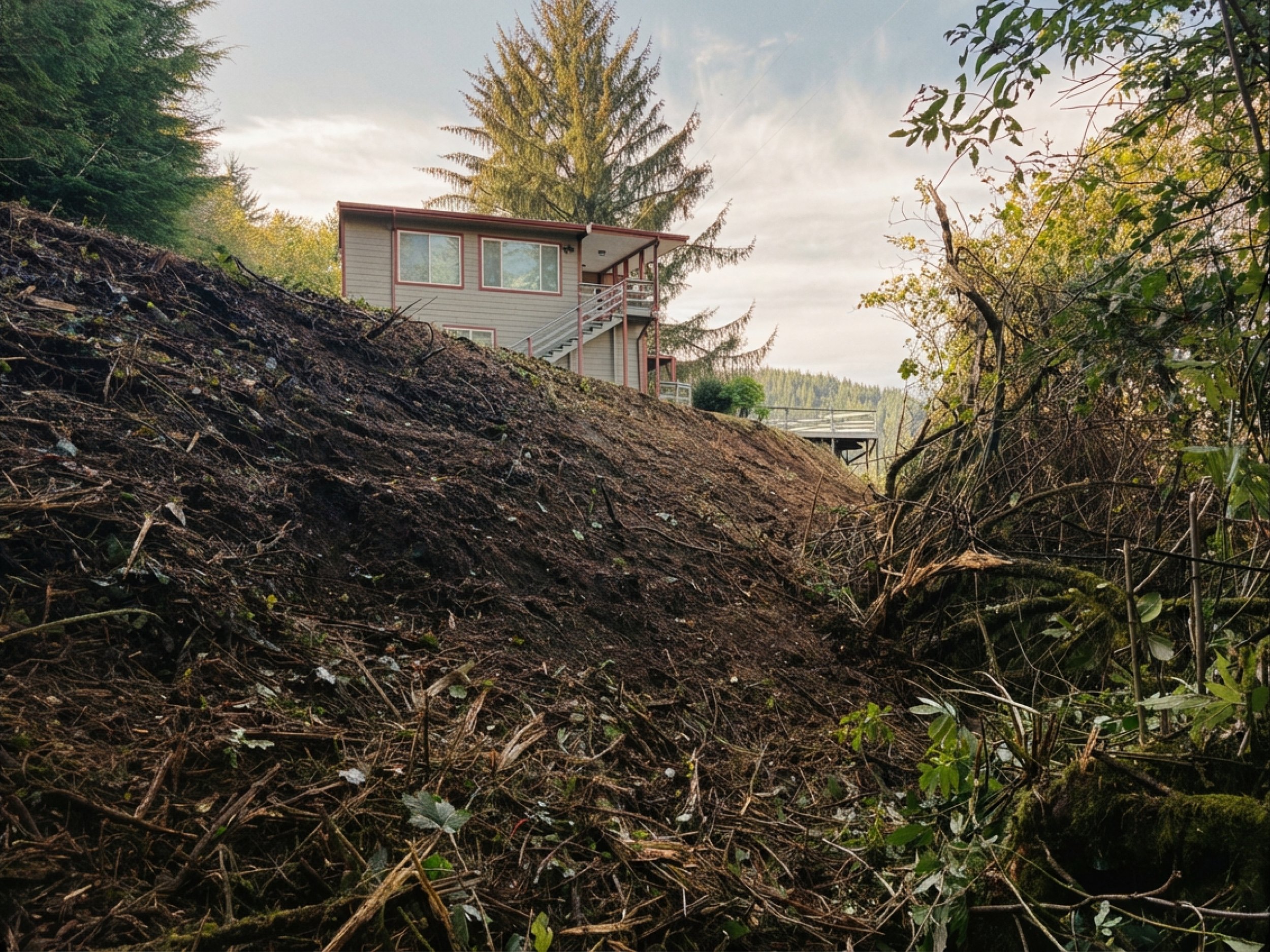
Clearing a lot for construction, a new driveway, or a future landscape project. We remove vegetation, grind stumps, grade the surface, and leave the site ready for the next phase of work. If drainage or erosion control is needed before building starts, we handle that too.
NFPA Firewise USA®
Home Ignition Zones
Most homes lost to wildfire ignite from embers — not direct flame contact. Defensible space is about managing what’s within 100 feet of your structure. Here’s how the zones break down.
Immediate Zone — 0–5 ft
Noncombustible zone directly against the house. Remove pine needles, leaves, and flammable debris from gutters, roof, and siding. No mulch, no plantings, no combustible materials touching the structure. Move firewood, propane tanks, and flammable patio furniture away from the house.
Intermediate Zone — 5–30 ft
Space shrubs and trees so crowns don’t touch each other or the house. Remove dead branches and vegetation creating fuel ladders. Keep grass mowed short and irrigated when possible. Prune trees so lowest branches are 6–10 feet above ground.
Extended Zone — 30–100+ ft
Thin trees so canopy cover is reduced and crowns are separated. Remove dead trees, brush piles, and accumulated forest debris. Create fuel breaks along driveways and access routes. Reduce continuous vegetation that can carry fire toward the structure.
Hardening the Home
Use fire-resistant roofing materials and ember-resistant vents. Screen gutters and eaves to block ember entry. Keep firewood stacks, propane tanks, and combustible patio furniture at least 30 feet from the house. These are the details that determine whether your home survives a wildfire.
The First Step Is Free.
Tell us what's going on.
Call, email, or fill out the form — whatever's easiest. We'll get back to you directly to find a time.
We come to you.
Free, in person, no obligation. We walk the property together, figure out what's actually happening, and talk through a real plan before we leave.
Clear estimate, no surprises.
You get honest numbers in writing. You decide if and when to move forward.
No charge for the visit. No sales pitch. No subcontractors.
The people who walk your property are the same ones who do the work.